
University of Sao Paulo, Graduation Thesis, Brazil, 2021.
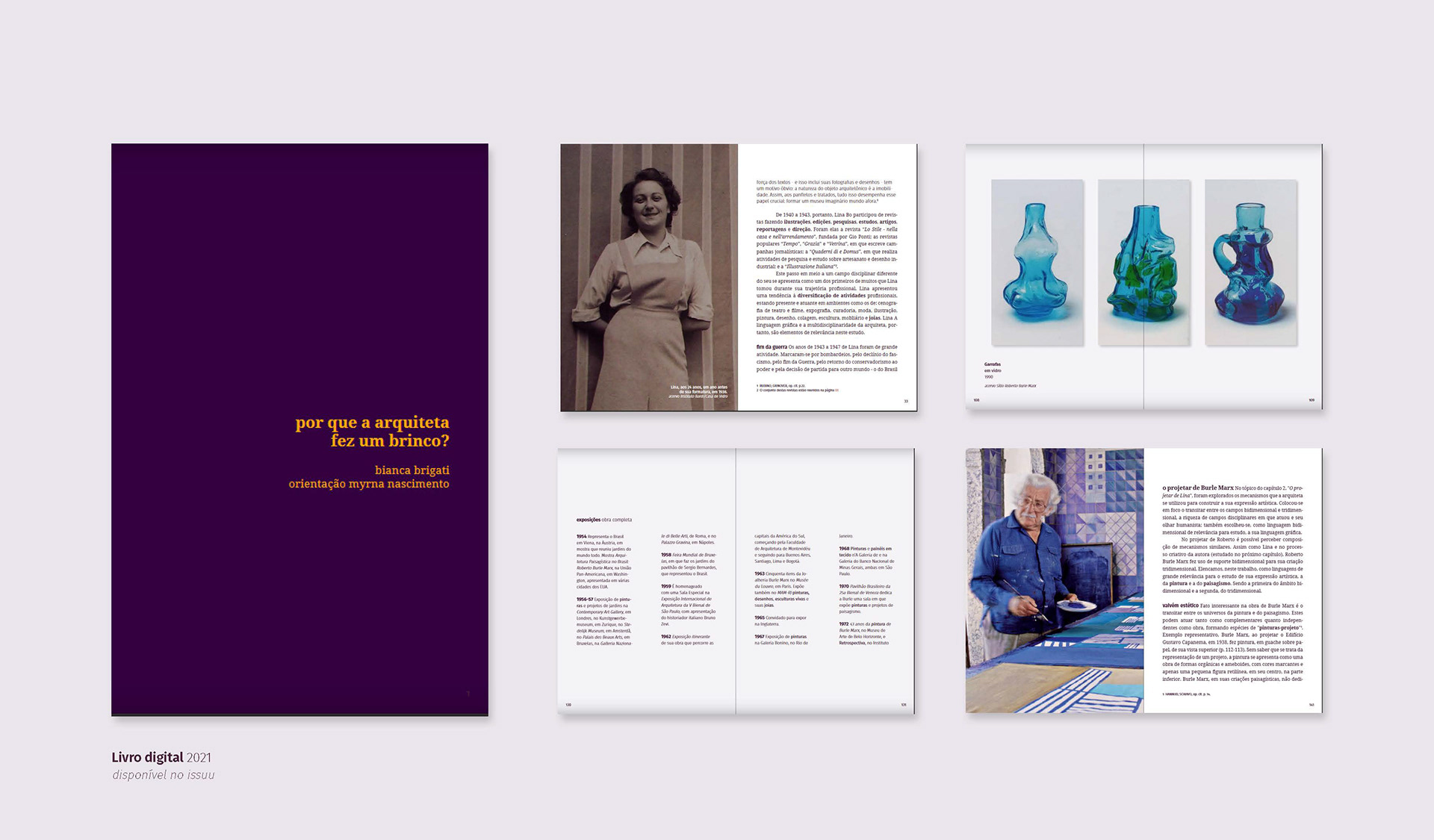
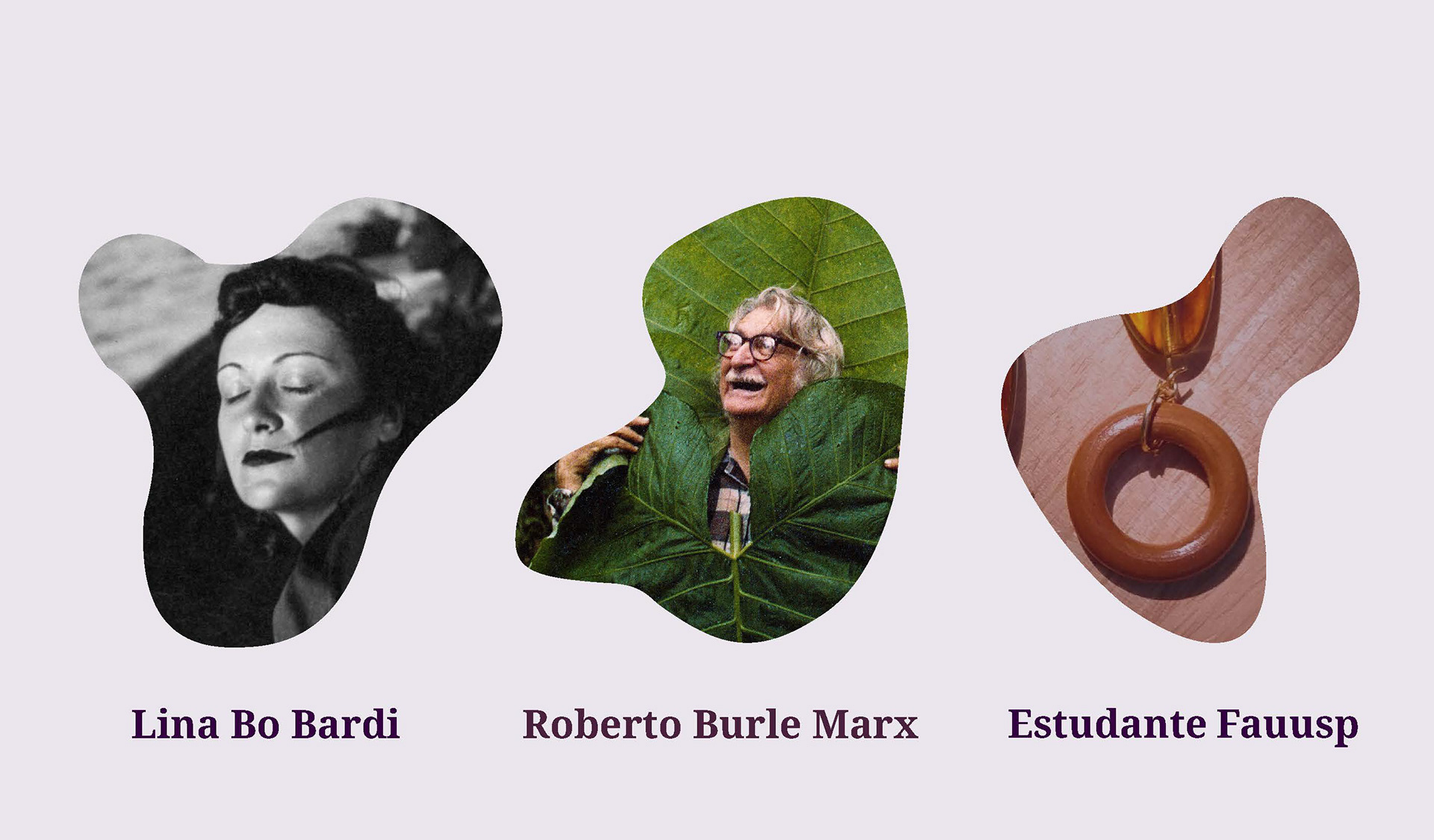
"Why did the architect make an earring?" is my graduation thesis research, at the University of São Paulo, in Brazil, for my Architecture and Urbanism (FAU-USP) bachelor degree. This study analyses the carreer and creative process of artists that have worked with architecture and jewelry. The objects of analysis are the italian architect Lina Bo Bardi, the brazillian landscape architect Roberto Burle Marx and even my own creative processes while making earrings as a student of FAU-USP. The goal of this study was to widen the research of multidisciplinary studies of artistic creation, specially on the architecture and jewelry fields, and to do a self investigation of my own creative process.
"Por que a arquiteta fez um brinco?" é o meu trabalho final de graduação, na Faculdade de Arquitetura e Urbanismo da Universidade de São Paulo (FAU-USP). Estudei a trajetória e o processo criativo de artistas que atuaram tanto no campo da arquitetura quanto no das joias. Foram analisados a arquiteta Lina Bo Bardi, o paisagista Roberto Burle Marx e o meu próprio processo criativo ao fazer brincos enquanto estudante da FAU-USP. Com este trabalho, objetivei ampliar os estudos do campo multidisciplinar da criação artística, principalmente das áreas da arquitetura e da joalheria, assim como também fazer uma auto análise do meu próprio processo criativo.
methodology
To analyse each of the three objects of study - Lina Bo Bardi, Roberto Burle Marx and my own creative process - three research scopes were chosen: their trajectory, their design methods and their jewelry. From these scopes, I was able to discover more about the singularities of each of these multidisciplinary artists as so to investigate my own formation as an architect and my artistic creations.
Para analisar cada um dos três objetos de estudo - Lina Bo Bardi, Roberto Burle Marx e o meu próprio processo criativo - foram adotados três escopos principais de análise: a trajetória, o modo de projetar e as joias de cada um deles. A partir destes escopos, pude descobrir um pouco mais sobre as peculiaridades de cada um destes artistas multidisciplinares assim como investigar a minha própria formação e as minhas criações.

insights | lina bo bardi
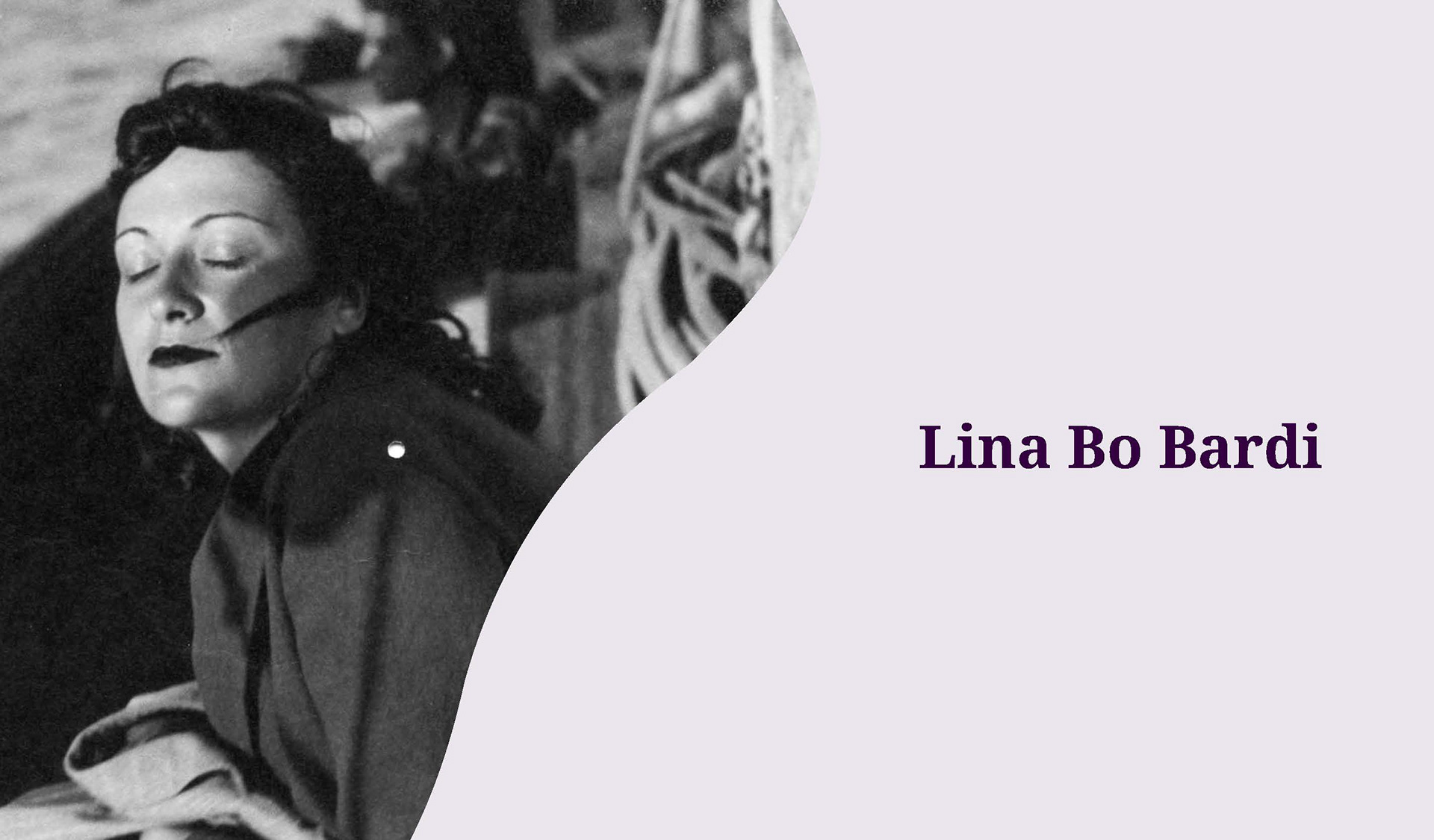
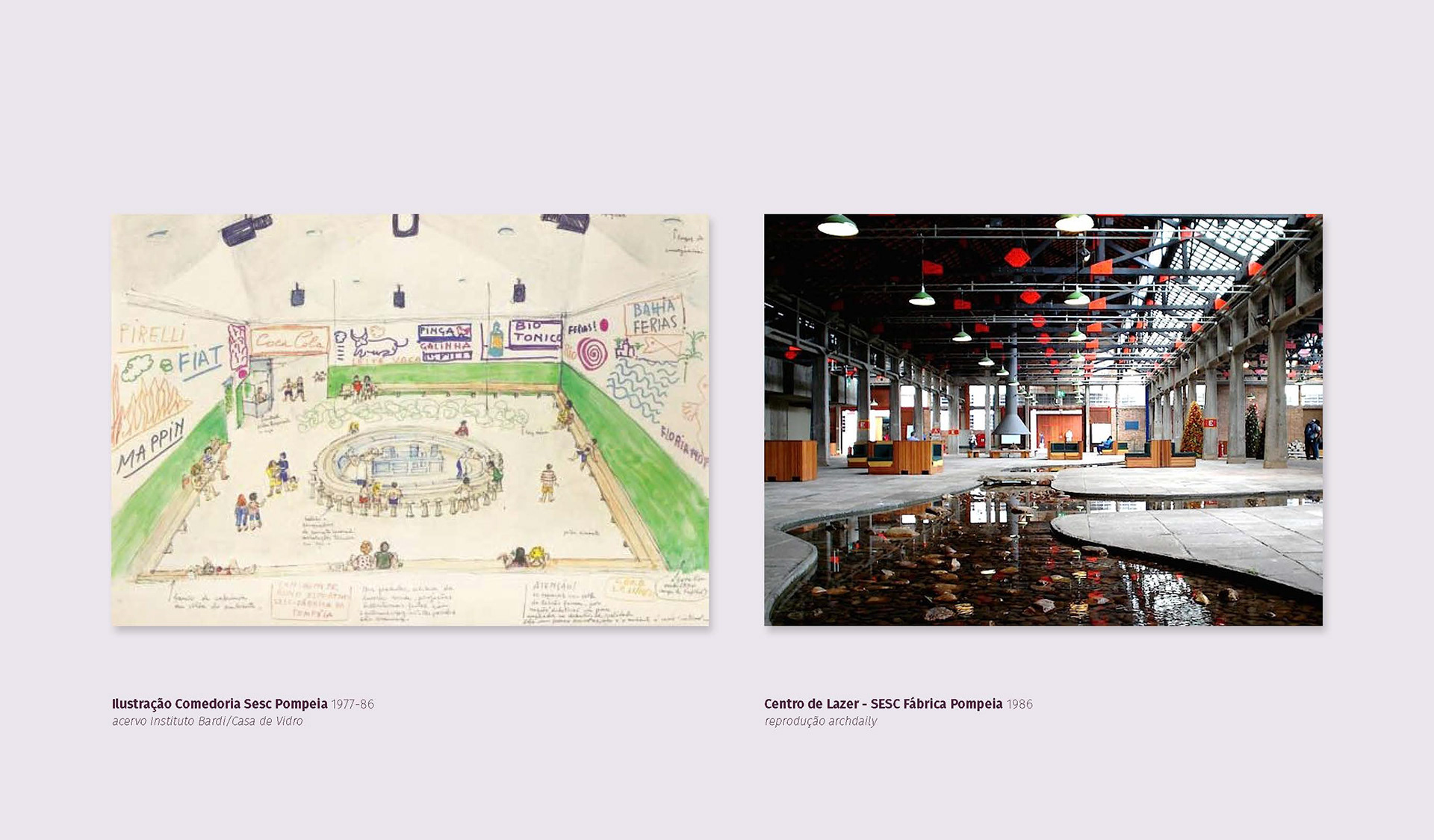
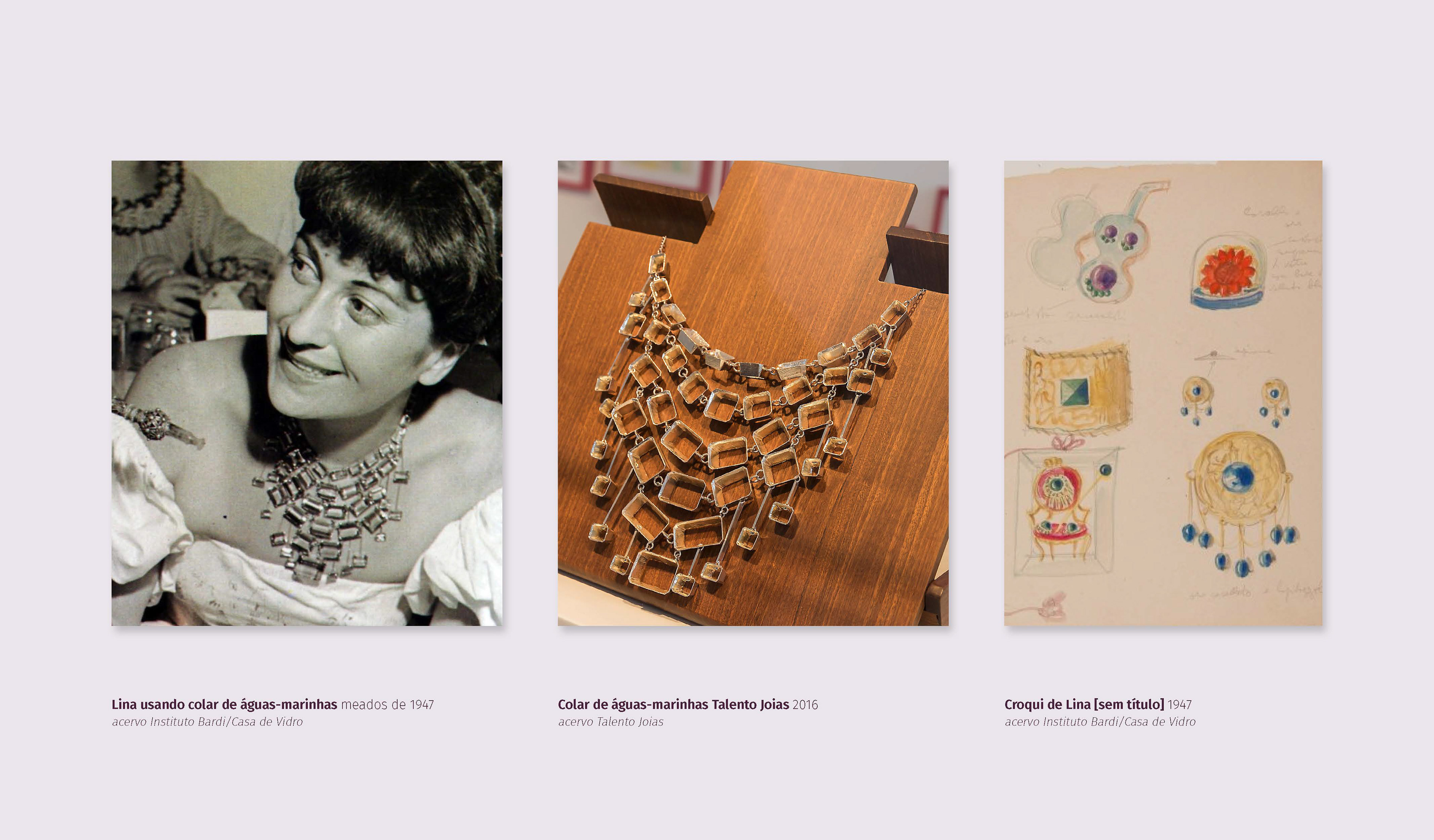
Studying Lina Bo Bardi's trajectory, the biggest highlights were the search for a popular brazillian identity and her focus onto the "common" human being. Concerning to her design's mechanisms, it drawed attention the variety of her different ways of artistic expressions, the use of bidimensional and tridimensional apparatus (illustration and architecture, for ex.), the multidisciplinarity of her work (design, architecture, illustration, literature...) and the predominance of a graphic language.
Finally, analysing her jewelry production, all of these features can be noticed in her pieces, resulting in an authentic creation. Lina focused on working with only brazillian materials, many of which non valued by the time. Also, her singular graphic language can be noticed in her jewelry, by using precise and inusitated drawing strokes.
Finally, analysing her jewelry production, all of these features can be noticed in her pieces, resulting in an authentic creation. Lina focused on working with only brazillian materials, many of which non valued by the time. Also, her singular graphic language can be noticed in her jewelry, by using precise and inusitated drawing strokes.
Estudando a trajetória de Lina Bo Bardi, destacaram-se a busca pelo popular brasileiro e seu olhar voltado para o homem comum. Observando seus mecanismos de projeto, sobressaltam-se a variedade de recursos de expressão artística, o uso de suportes bidimensionais e tridimensionais (ilustrações e projetos arquitetônicos, por exemplo), a multidisciplinaridade (design, arquitetura, ilustração, literatura...) e a predominância de uma linguagem gráfica. Assim, analisando suas joias, é possível perceber a sua expressão artística única permeada em suas peças, as quais focou em sempre explorar materiais brasileiros - muitos até então desvalorizados. Além disso, a sua linguagem gráfica única, repleta de traçados precisos e inusitados, também está presente em suas joias.
insights | roberto burle marx
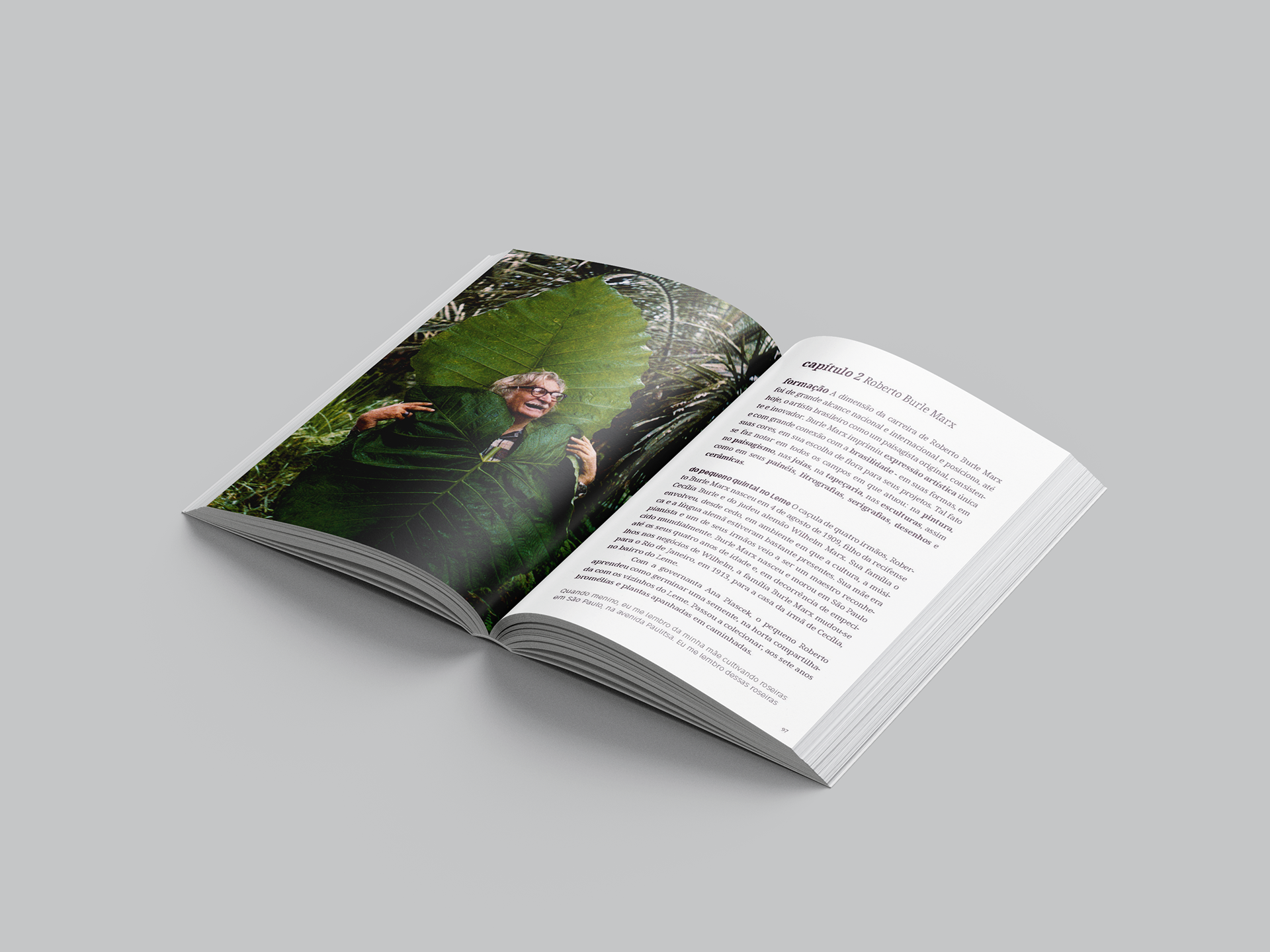
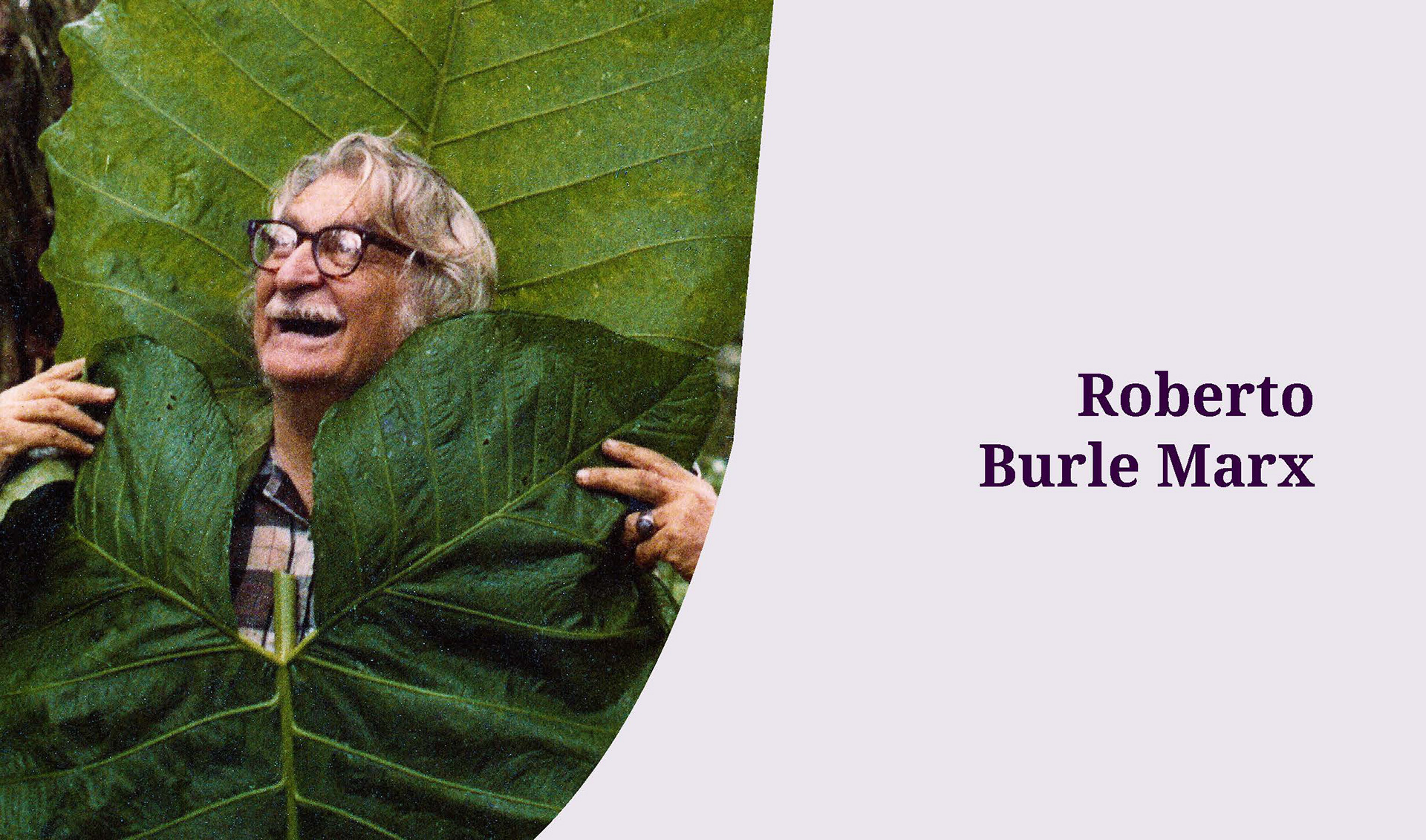
Regarding Roberto Burle Marx's study, it was possible to notice the biggerness of his work compile and its "brazillianity" essence. Roberto, as well as Lina Bo Bardi, was highly inserted in the artistic and cultural brazillian environment. But different from the architect, the landscaper also had a relevant presence in the international panorama.
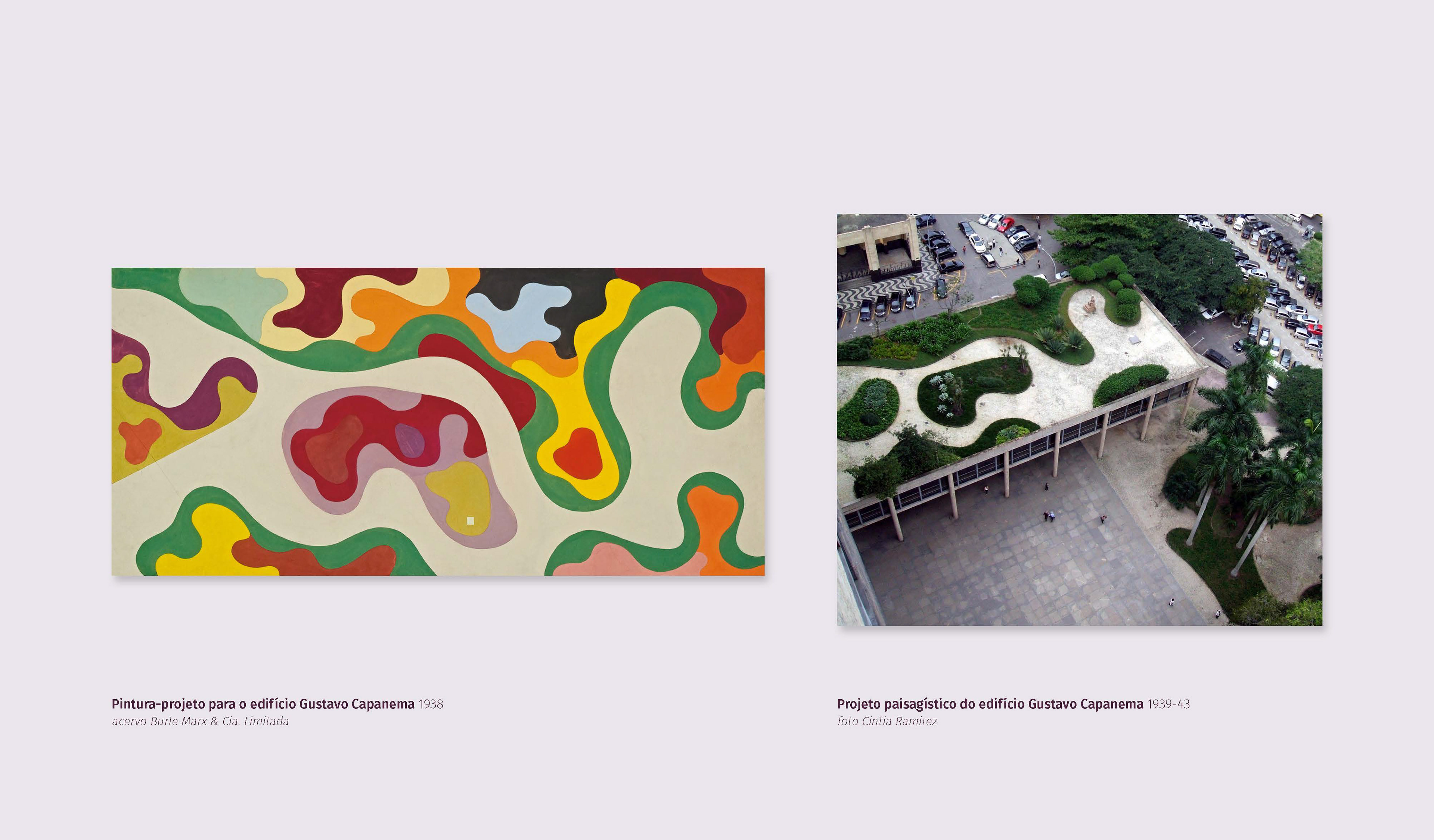
In the matter of his design methods, it is noticed the presence of similar Lina's mechanisms, but singular features of the artist illuminate theirselves: the relevance of painting of part of his artistic expression and the nature as the space of his designing action.
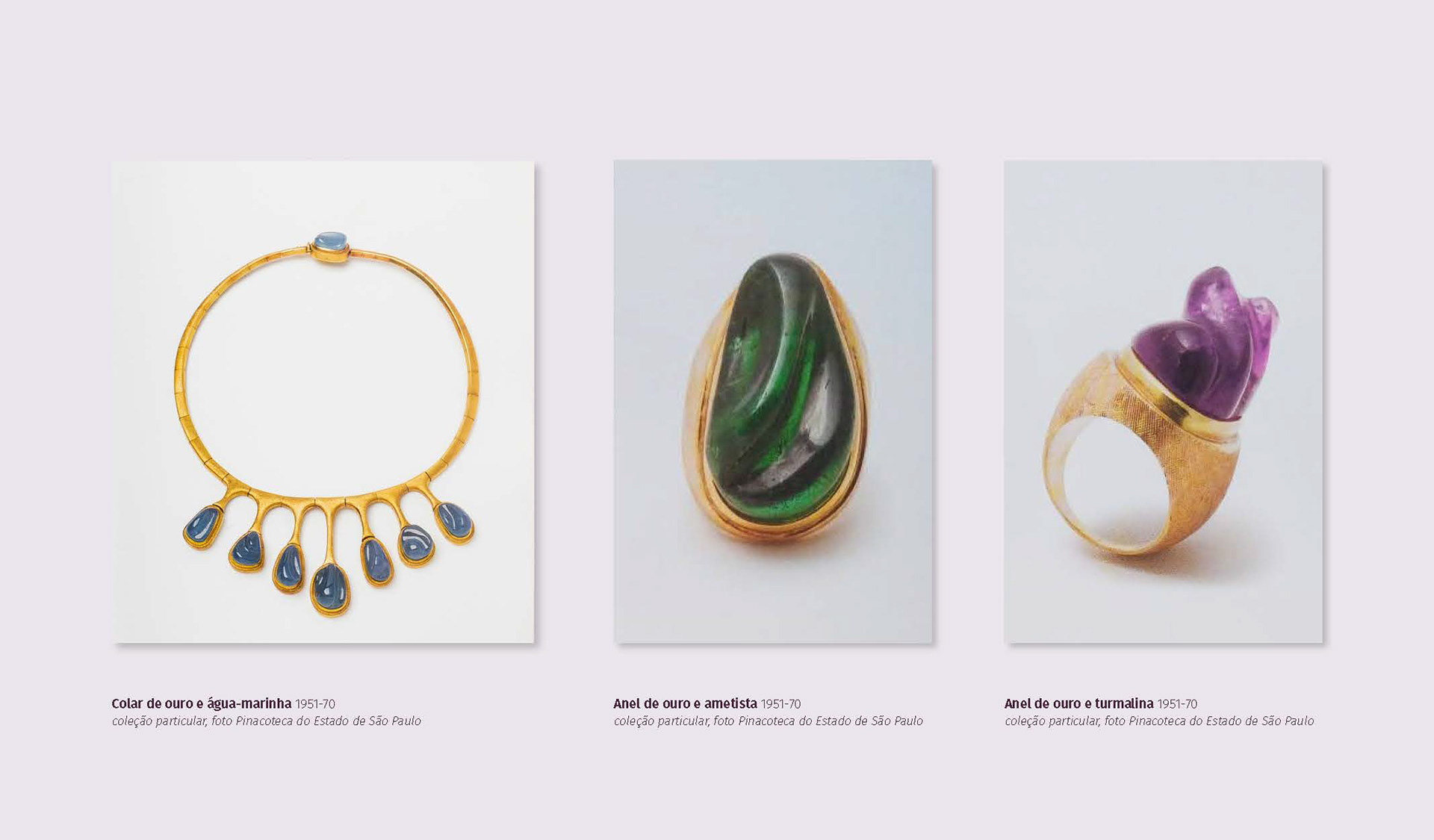
At last, analysing his jewelry work, its organic shapes and the use of brazillian gemstones impress the unique identity of the artist.
In the matter of his design methods, it is noticed the presence of similar Lina's mechanisms, but singular features of the artist illuminate theirselves: the relevance of painting of part of his artistic expression and the nature as the space of his designing action.
At last, analysing his jewelry work, its organic shapes and the use of brazillian gemstones impress the unique identity of the artist.
Já no estudo do paisagista Roberto Burle Marx, foi possível perceber a grandeza de seu conjunto de obra e a forte brasilidade que o exprime. Analisando a sua trajetória profissional, é possível perceber a sua inserção no meio cultural e artístico brasileiro, assim como Lina Bo Bardi, além de uma forte internacionalização. No que diz respeito ao seu modo de projetar, nota-se a presença de mecanismos similares aos de Lina Bo. No entanto, sobressaem-se elementos singulares ao paisagista: a importância da linguagem da pintura como parte de sua expressão artística e a natureza como espaço de sua atuação projetual. Por fim, voltando-se para a sua produção de joias, suas formas orgânicas, com o uso de pedras naturais brasileiras, imprimem a identidade única do artista.
self creative process
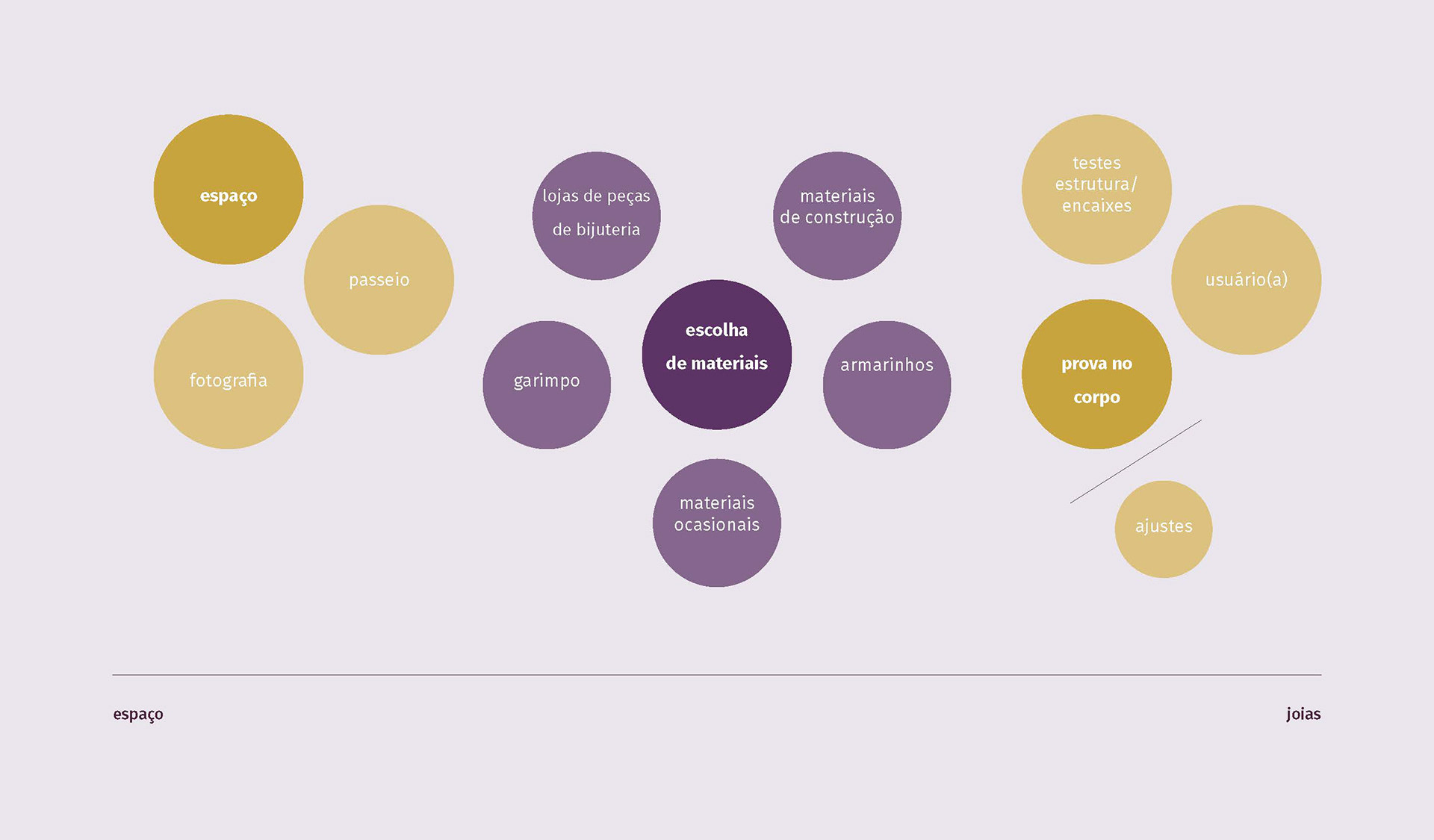
In the last chapter of the research, named "Experimentations", it is analysed my own creative processes, in which I produce earrings with different materials, collected in multiple places. I observe my brief academic and also professional trajectory, punctuate my choice to create my own brand, and emphasize the use of analog photography in my work.
No último capítulo do estudo, intitulado "Experimentações", são analisados os meus próprios experimentos criativos, em que crio brincos com diversos tipos de materiais diferentes, coletados em variados locais. Observo a minha breve trajetória tanto acadêmica quanto profissional, pontuo a escolha por criar uma marca, e ressalto a atuação da fotografia analógica no meu processo criativo.
analog photography
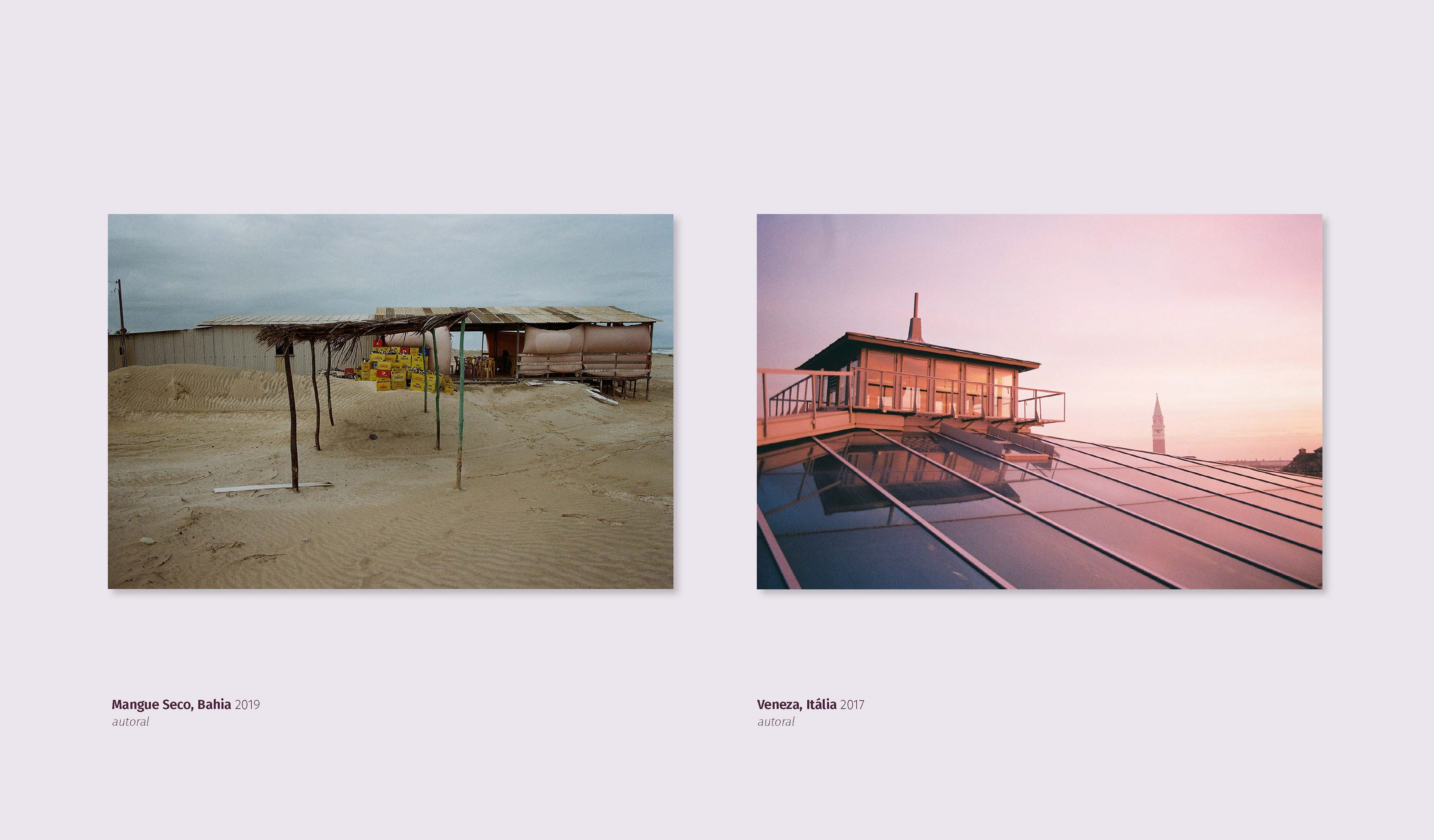
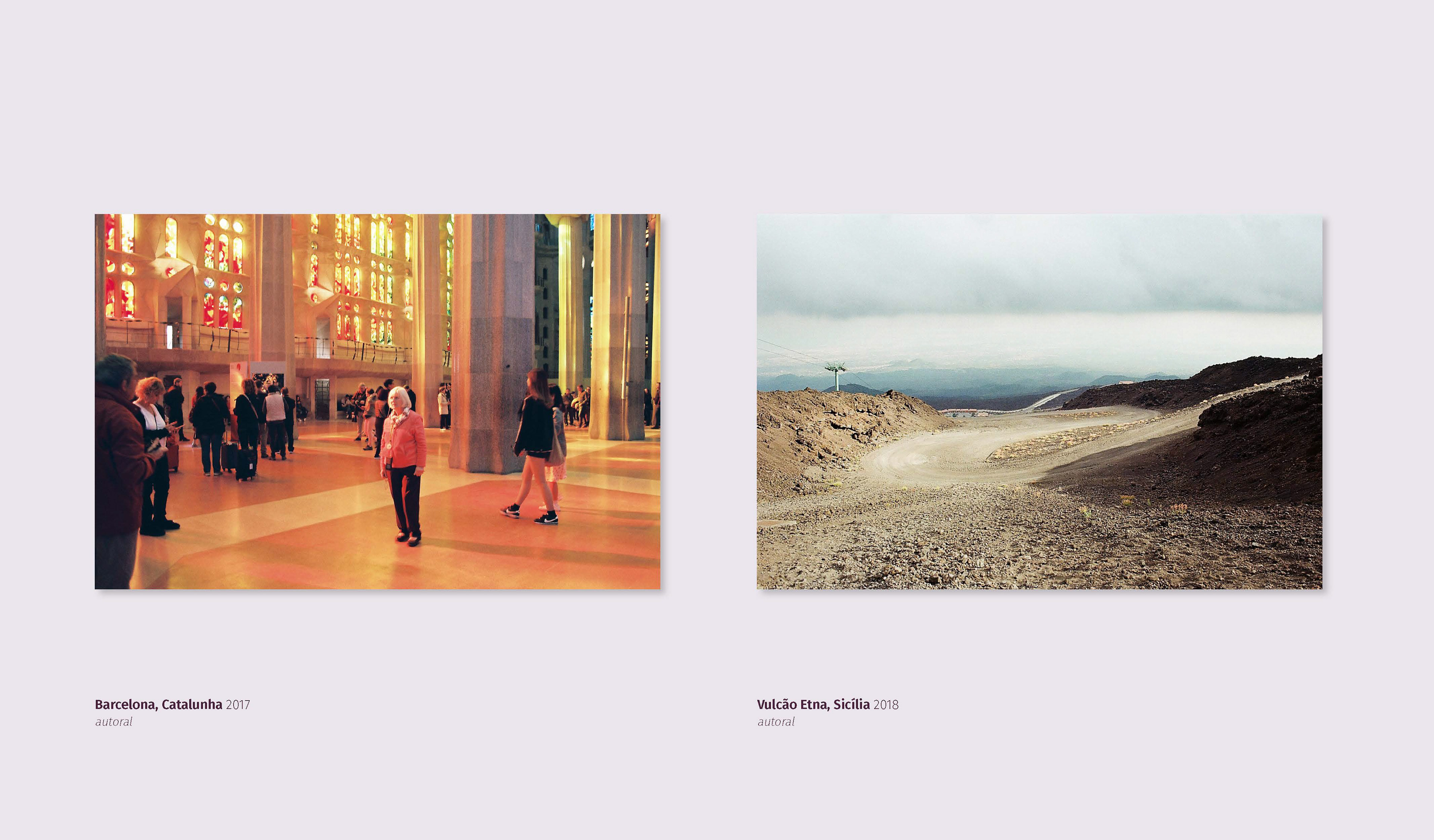
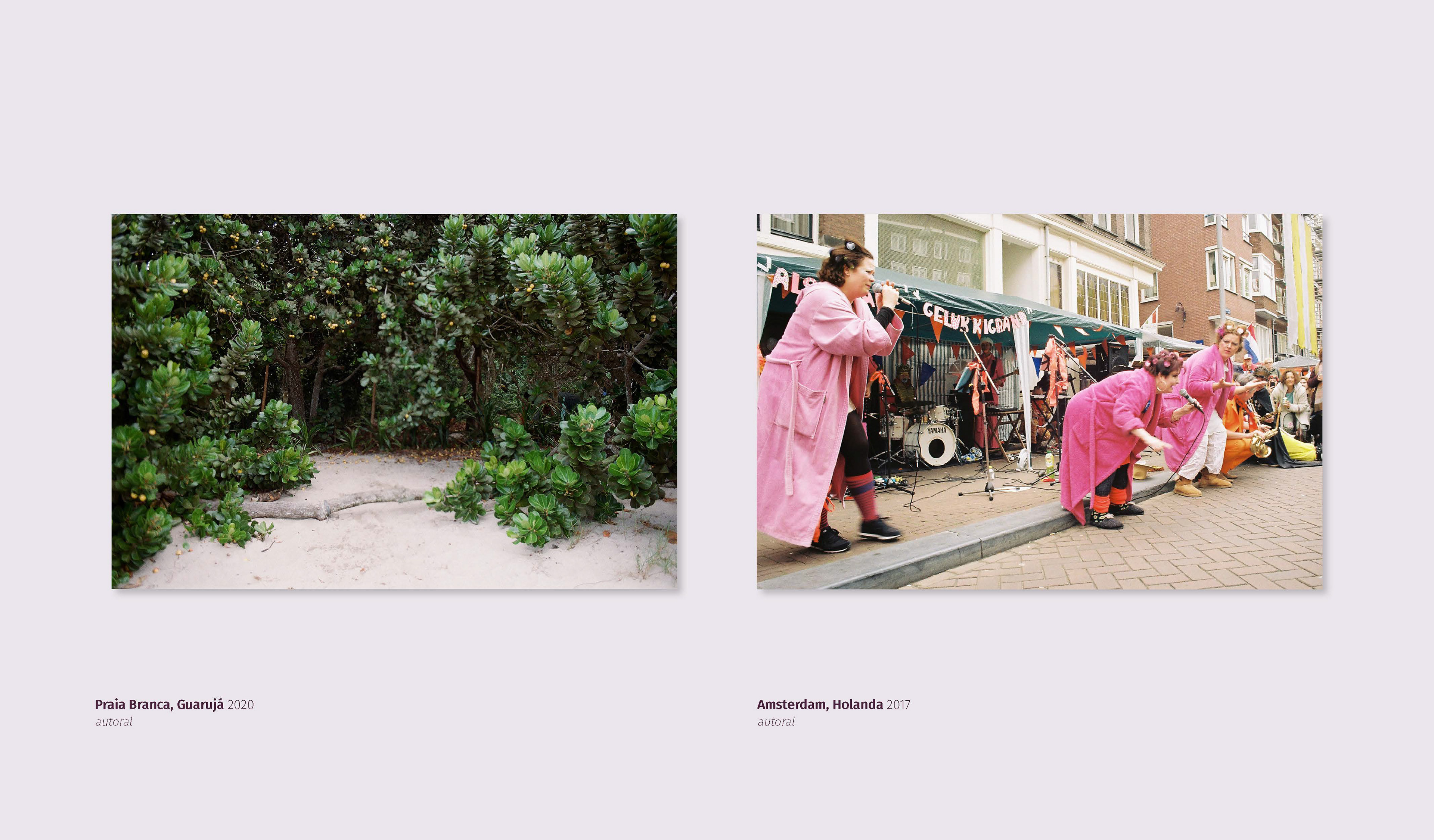
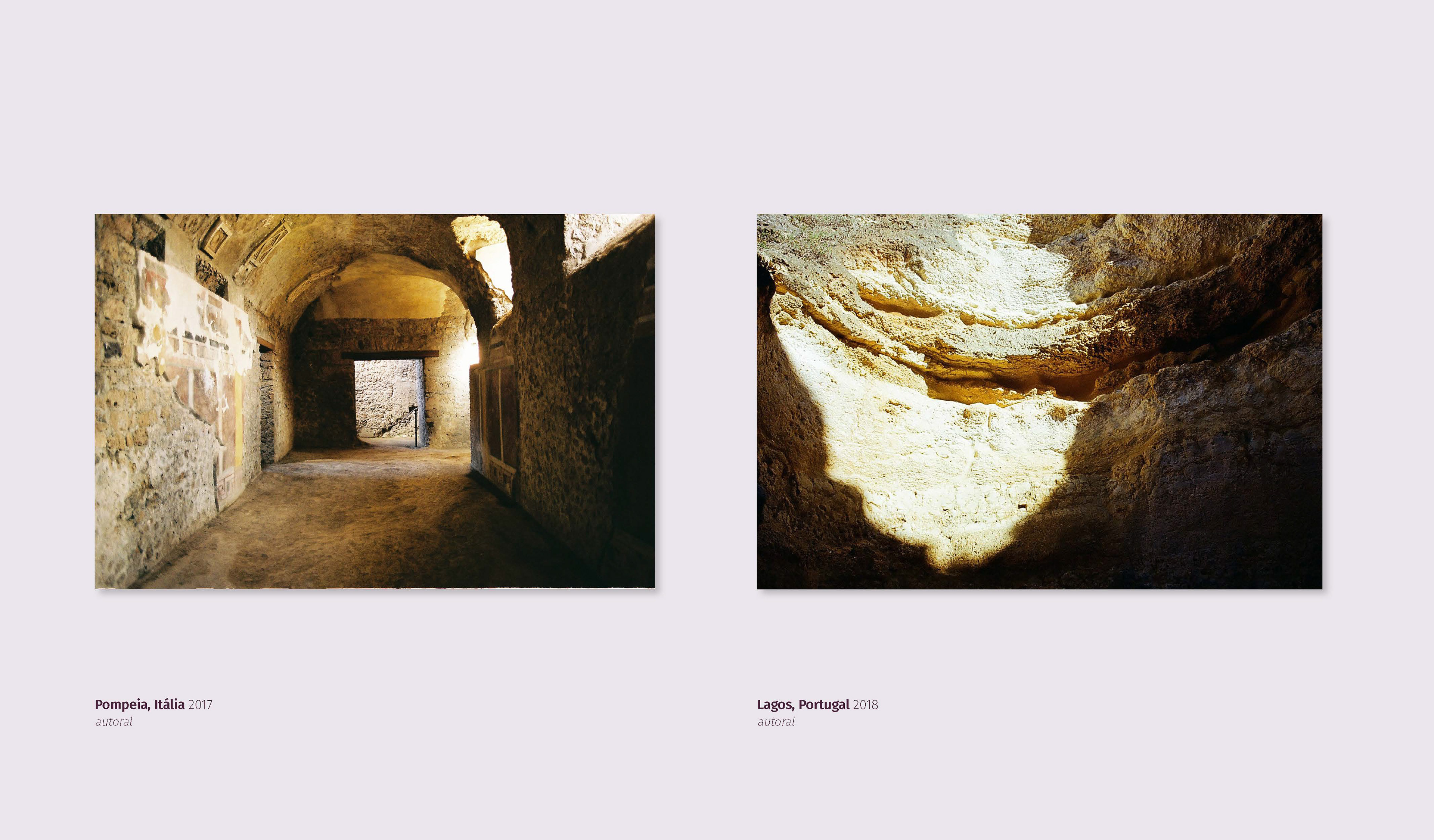
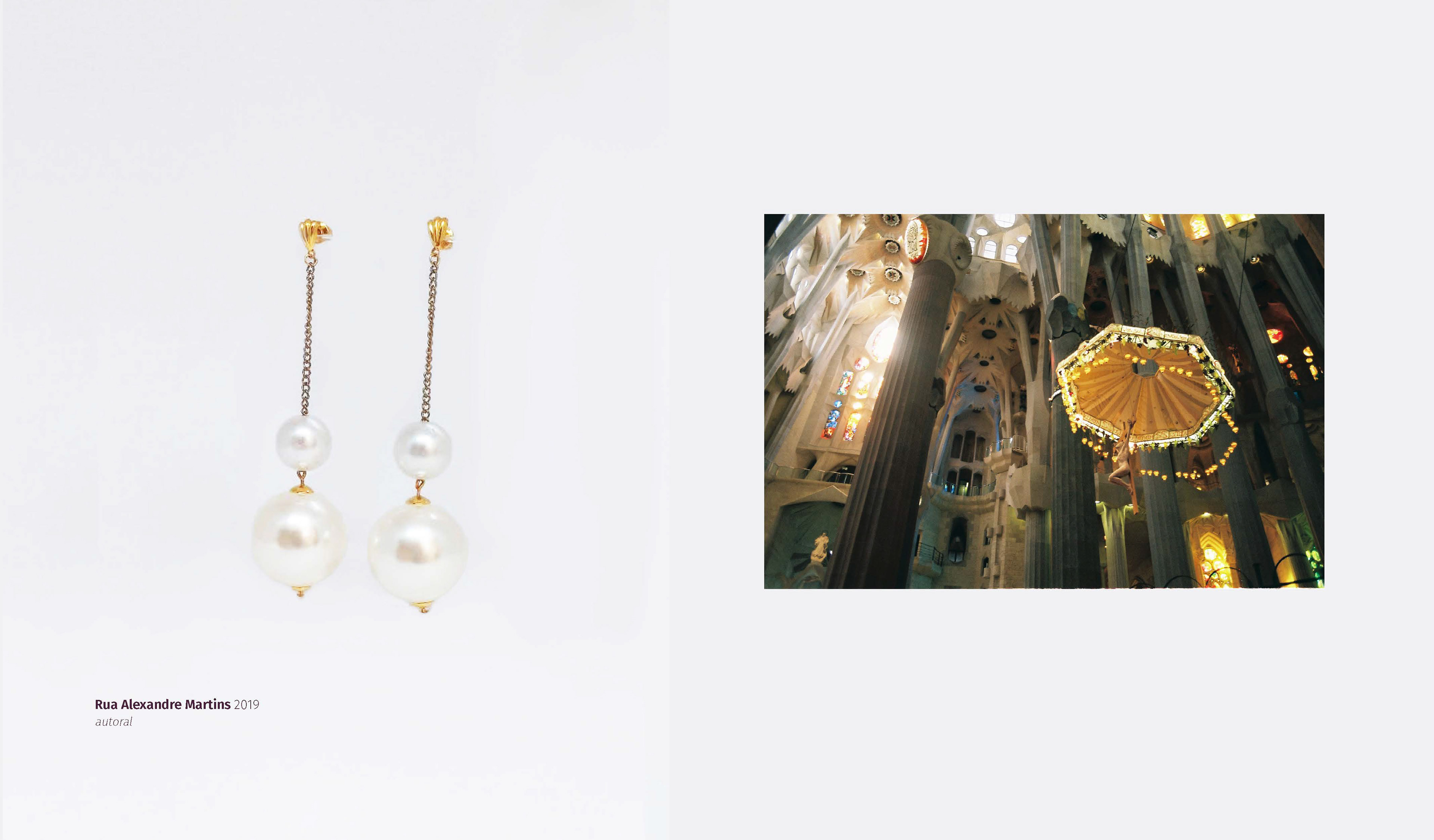
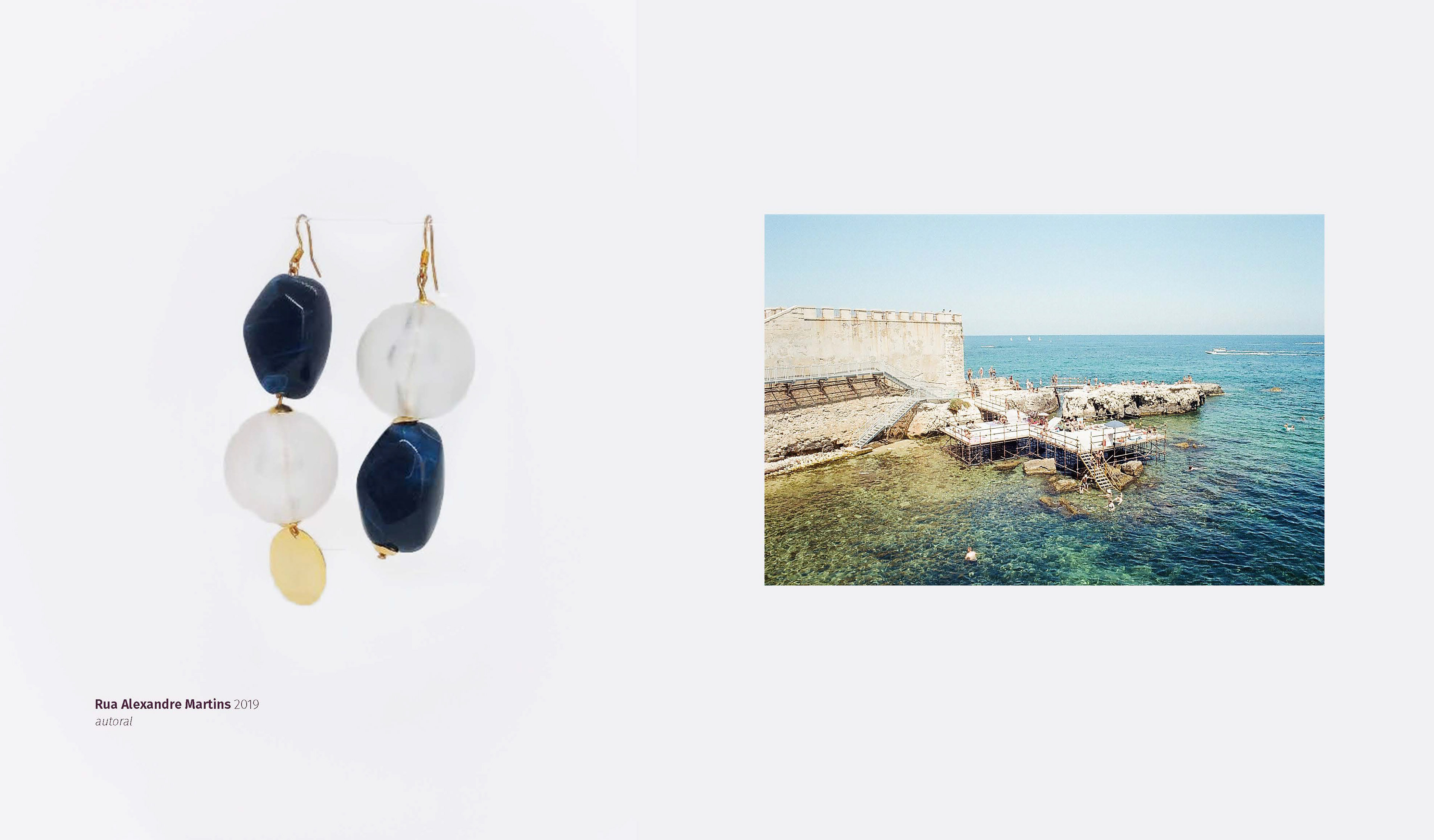
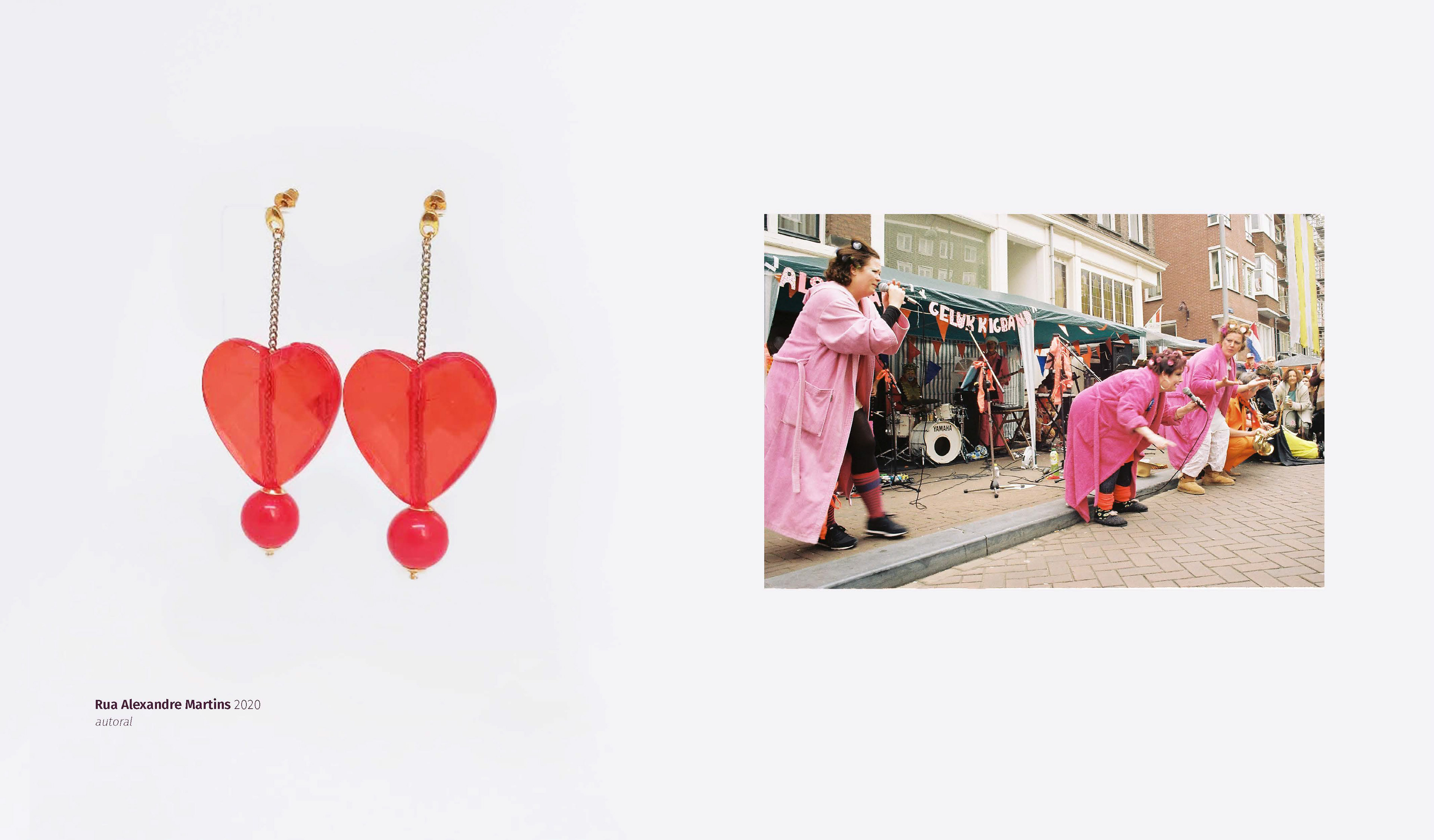
The analog photography in my creative process acts as a record of my reading of the spaces, as an architect. This reading, inevitably, "contaminates" my earring creation. In it, I stablish a conexion between the impressions I had in the space I have been and the own materiality of the earring.
A fotografia analógica no meu processo criativo se mostrou como um registro da minha leitura dos espaços, como arquiteta. Esta leitura, inevitavelmente, "contaminou" a minha criação de brincos, em que estabeleço uma conexão entre as impressões que obtive no espaço e a própria materialdiade das peças.
earrings
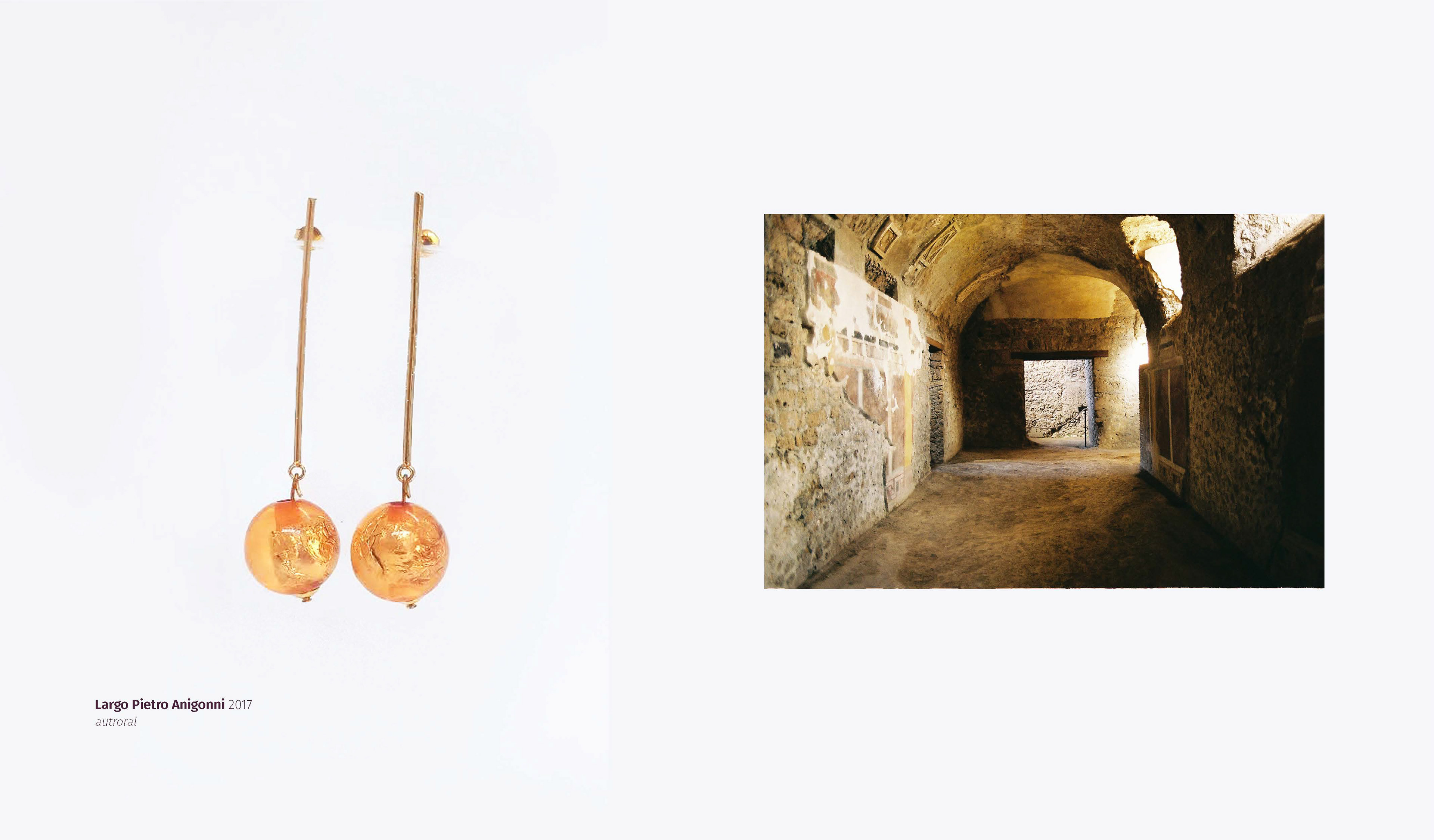
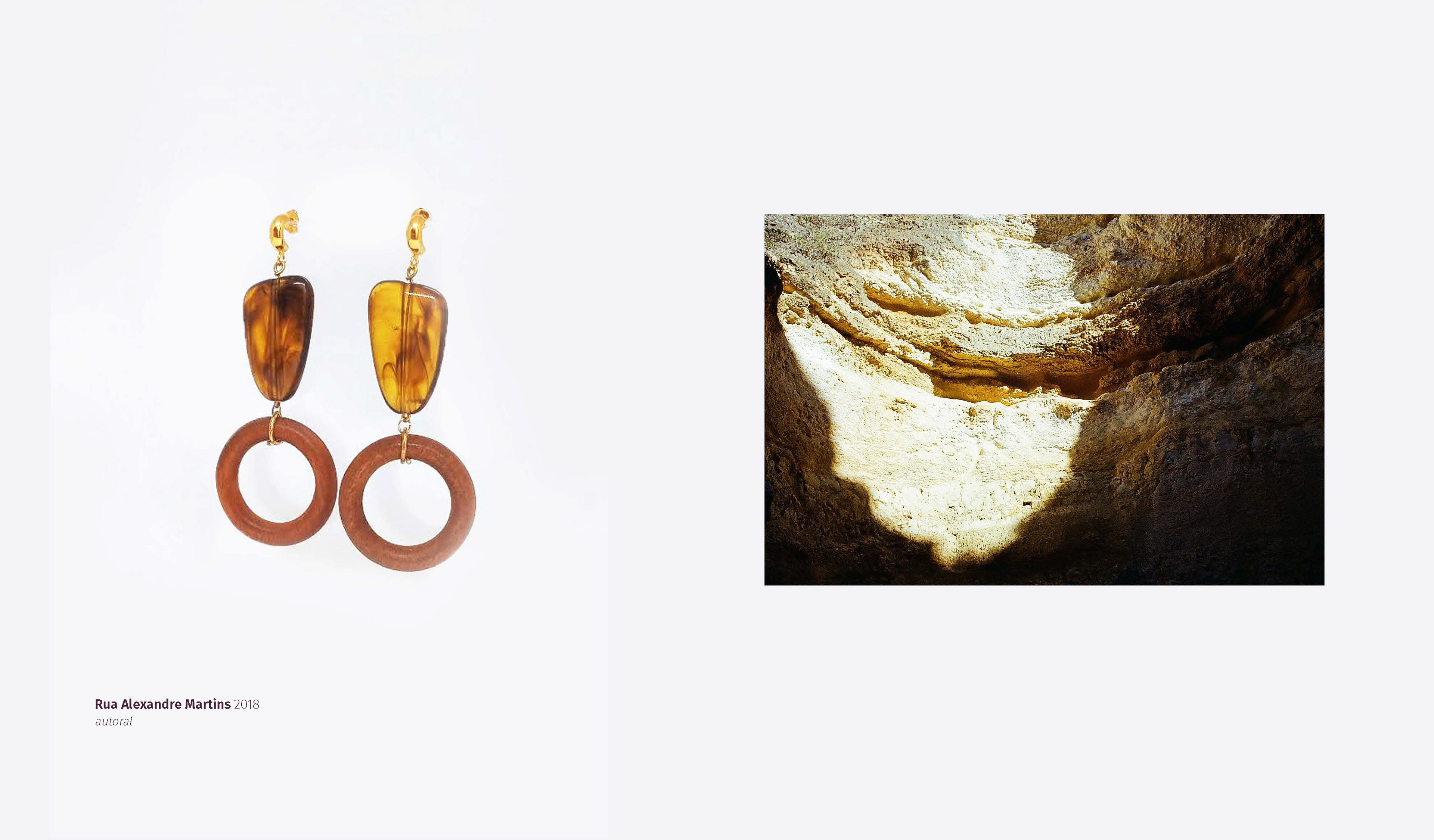
Therefore, by the end of the research, I create a little collection of earrings. In it, I spot, side by side, the places that relate with these pieces I have created.
Sendo assim, crio, ao final do trabalho, uma pequena coleção em que coloco, lado a lado, os espaços que se relacionam com as peças que criei.
conclusions
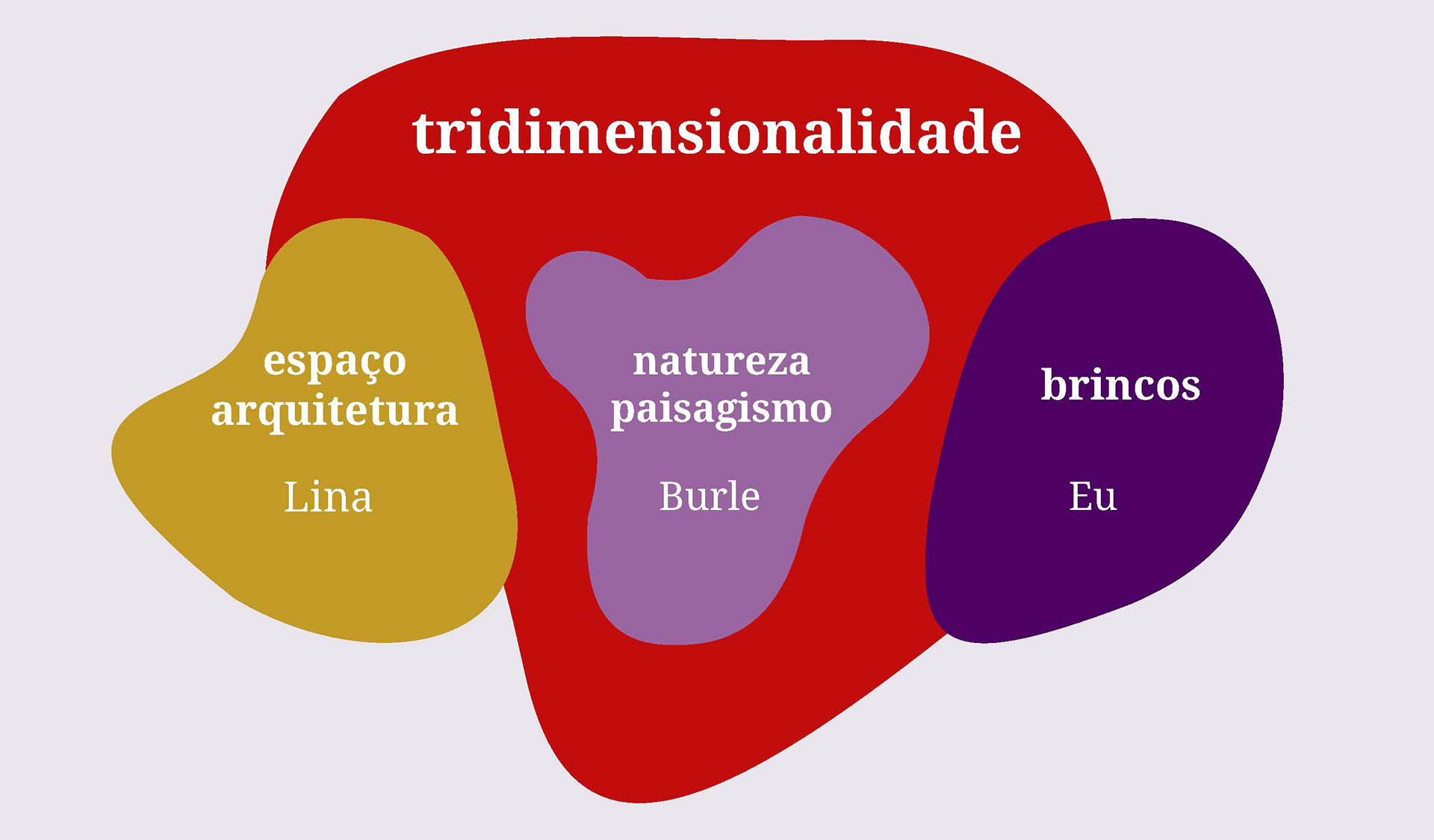
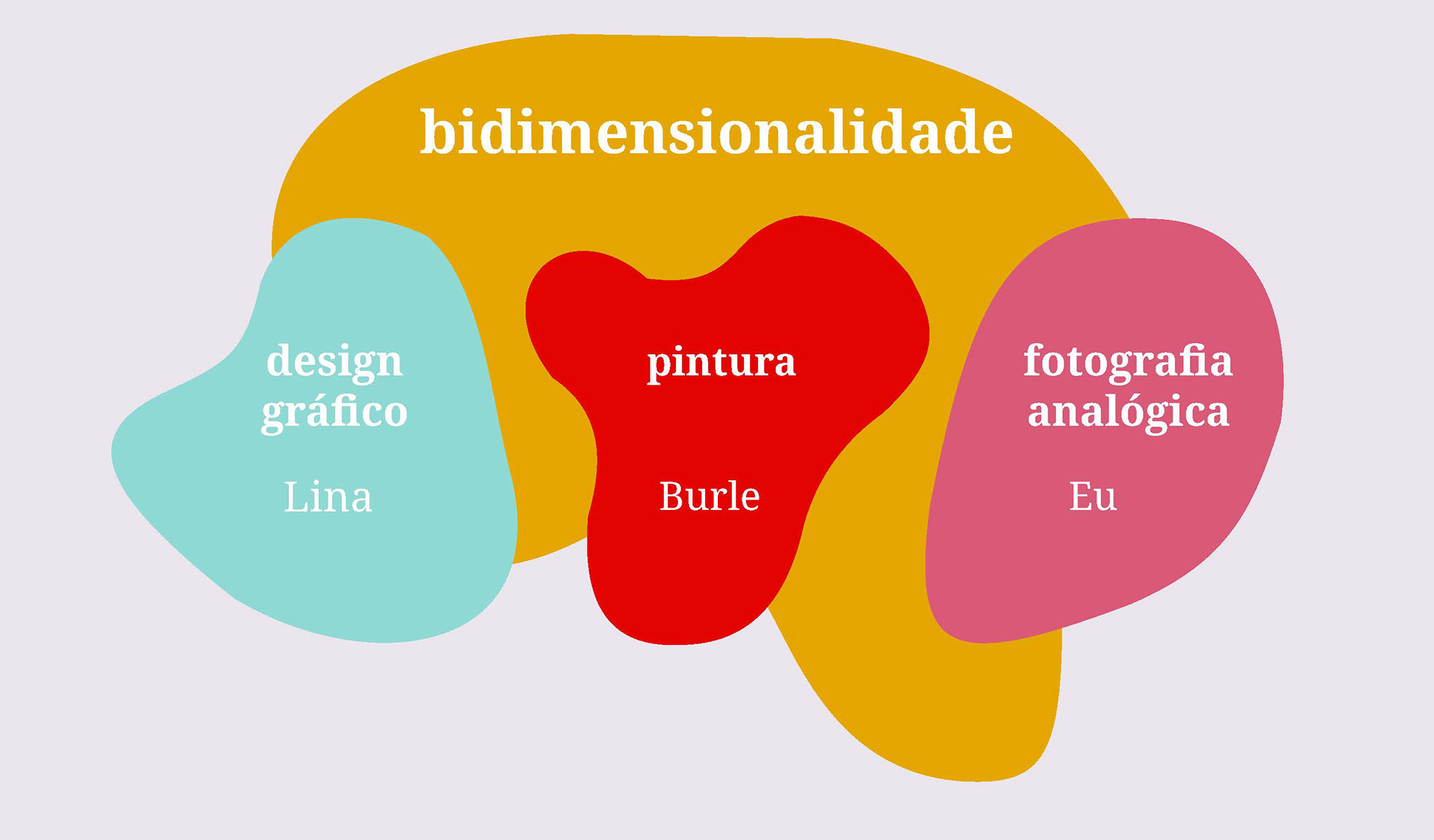
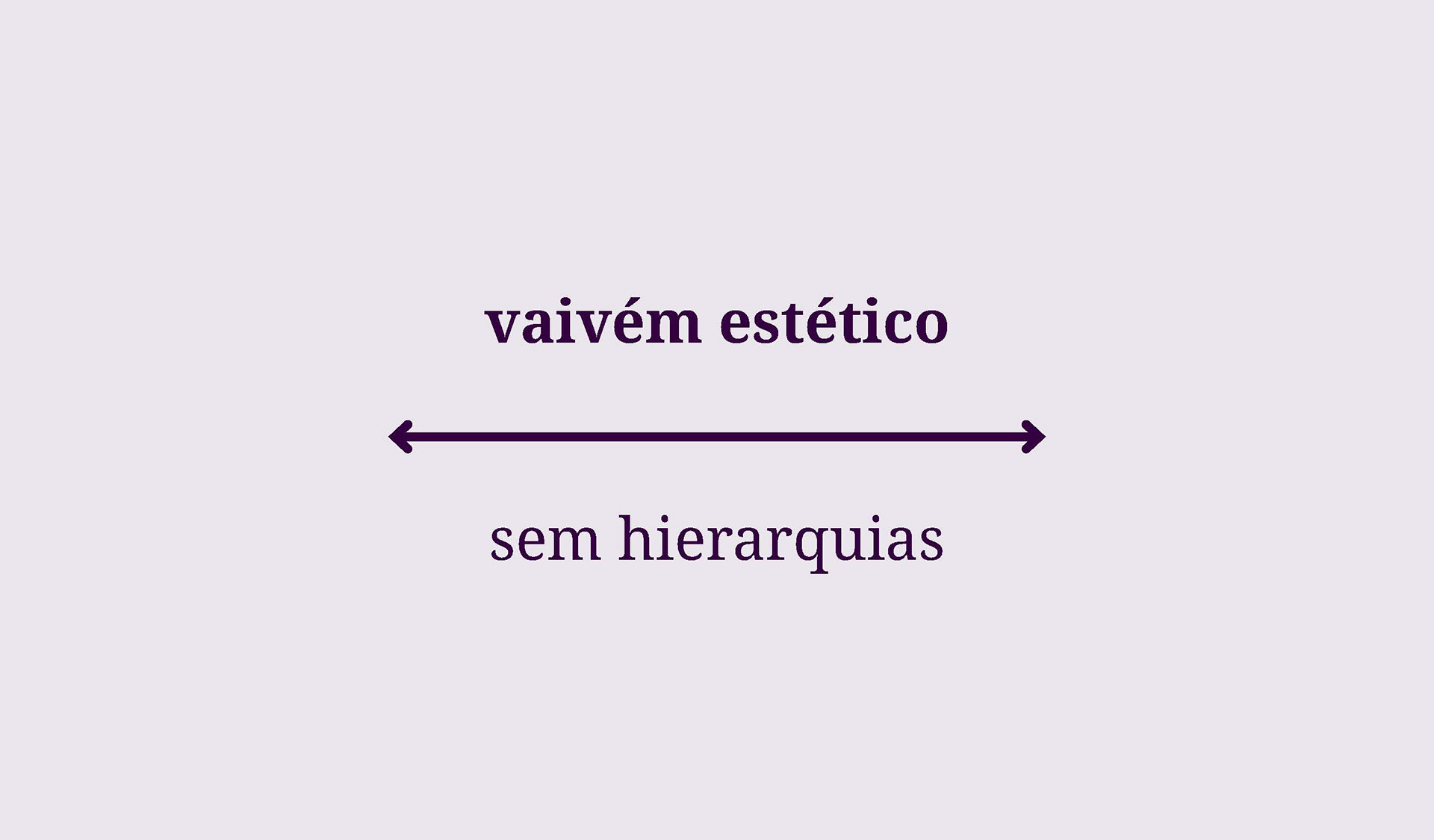
Finally, at the end of the research, comparison and relations are stablished between the three objects of study - Lina, Roberto and student of FAU-USP - and the three scopes chosen - trajectory, design methods and jewelry. The main insight brought out of this panorama is that: all of the analysed study objects make use of bidimentional (architecture, nature/lanscape and earrings) and tridimentional (graphic design, painting and analog photography) apparatus in their creative processes. This creation's modus operandi uses what the researcher Giancarlo Hannud called "back and forth esthetical movement": a movement between these apparatus, without hierarchy, linearity or hyper rationalization. In this way, the research is concluded by bringing to light the use of this "back and forth esthetical movement" by Lina, Roberto as well as myself, as an architecture student, and also how this movement enriches a diverse and multidisciplinary artistic creation.
Por fim, ao final do estudo, são tecidas relações entre os três objetos de pesquisa, suas trajetórias, seus modos de projetar e suas joias. Fazendo emergir uma principal leitura: em seus processos criativos, todos os elementos analisados fazem uso de suportes bidimensionais - o espaço arquitetônico, a natureza/paisagismo e os brincos - e de suportes tridimensionais - o design gráfico, a pintura e a fotografia analógica. Este criar se utiliza de um ir e vir, entre estes suportes, sem hierarquias, sem uma linearidade de uso, sem uma racionalização: é o que o pesquisador Giancarlo Hannud irá chamar de "vaivém estético". Nesse sentido, conclui-se a pesquisa lançando luz à existência do vaivém estético entre os três elementos estudados - tanto em artistas consolidados como Lina Bo Bardi e Roberto Burle Marx, quanto de uma estudante da FAU-USP - e como ela é relevante em uma criação multidisciplinar, com diversos tipos de produções artísticas.
but why did the architect make an earring?
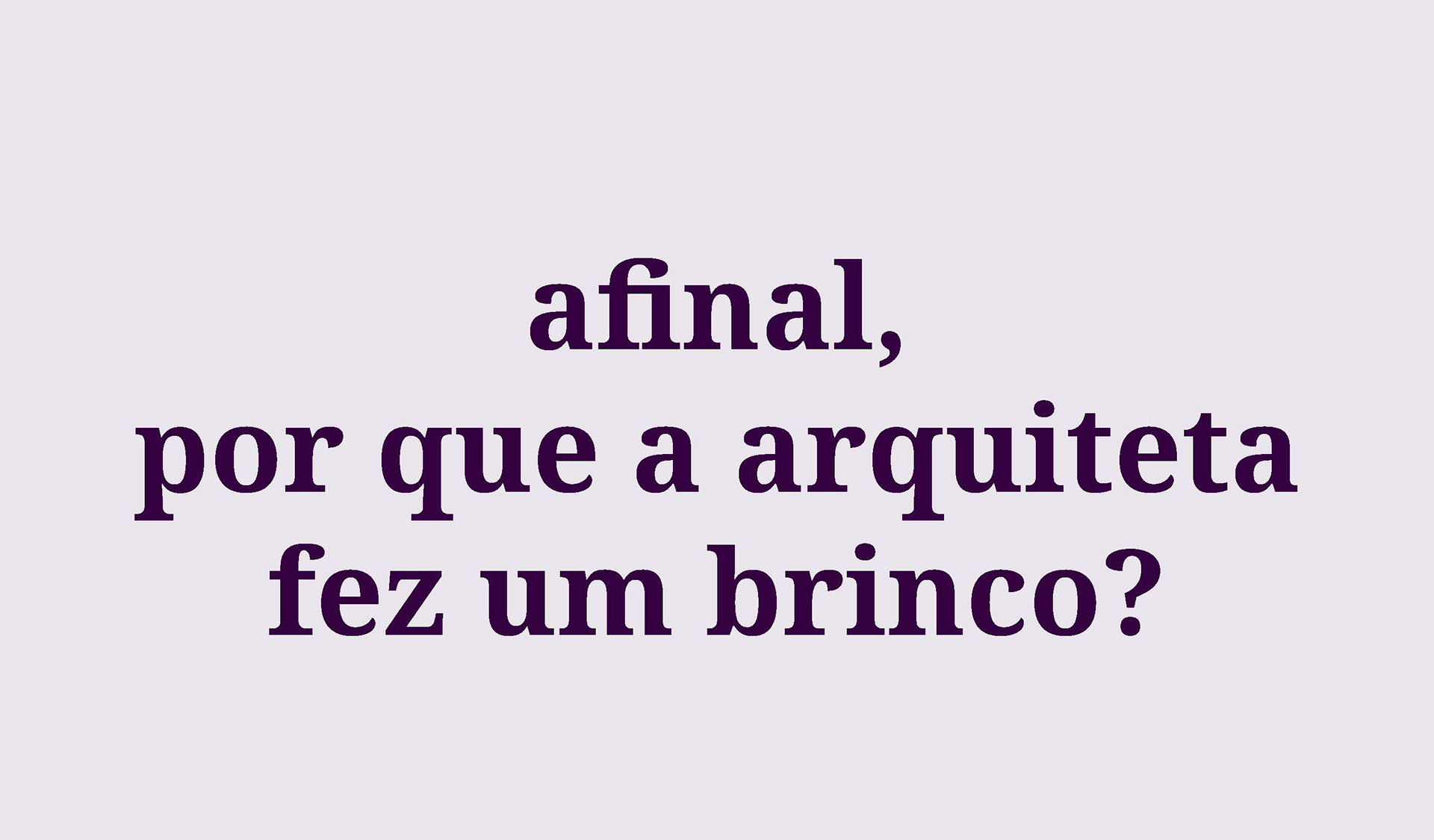
The title of this research is a question, though. Therefore, why, after all, did the architect make an earring?
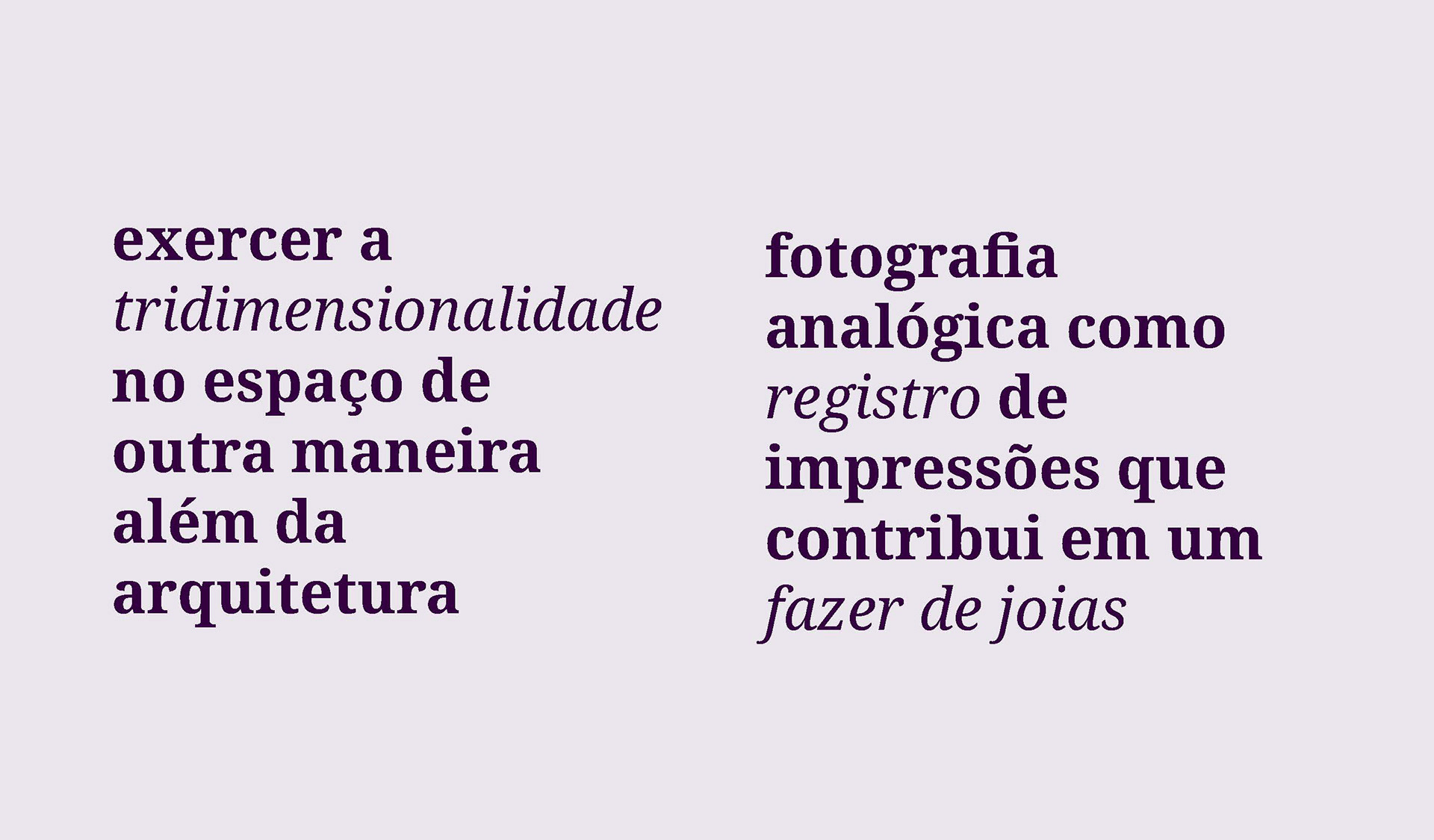
To answer to this question I believe it is necessary to comprehense who could be this architect, the subject of the sentence. The architect, in this case, is me. But it could also be Lina Bo Bardi or Roberto Burle Marx. To solve this question of mine, I had to look at other artists that have made the same movement that I have done during my graduation: from architectural spaces to jewelry. With this study of Lina and Roberto, I have find out that the architect made an earring because she could work with the tridimentionality of the space in another way that not architecture itself, even if making use of it. I have find out also that the analog photography shows up as a register of my own impressions of the space I'm in, and that it is a resource that shifts the tridimentional sphere to the bidimentional one. This move may contribute or not in a jewelry doing: it is the "back and forth esthetical movement", without hierarchies.
O título desta pesquisa é, no entanto, uma pergunta. E afinal, por que a arquiteta fez um brinco?
Para responder esta dúvida acredito que é preciso compreender quem seria esta arquiteta, o sujeito da frase. A arquiteta, neste caso, sou eu, mas poderia ser também Lina Bo Bardi ou Burle Marx. Para aquietar esta minha dúvida, precisei olhar para outros artistas que também fizessem o mesmo deslocamento que eu passei a fazer durante a minha graduação, do espaço às joias. Com o estudo de Lina e Roberto, descobri que a arquiteta fez um brinco porque pôde exercer a tridimensionalidade no espaço de uma outra maneira que não a arquitetura, mesmo que ainda se utilizando dela. Descobri também que a fotografia analógica aparece como um registro de minhas minhas impressões do espaço, e é um recurso que desloca o tridimensional ao bidimensional, podendo contribuir, ou não, em um fazer de joias - é o vaivém estético, sem hierarquias.
All of these previous considerations answer my initial question.
Nonetheless, I believe that I can also answer this question in a much more simpler way:
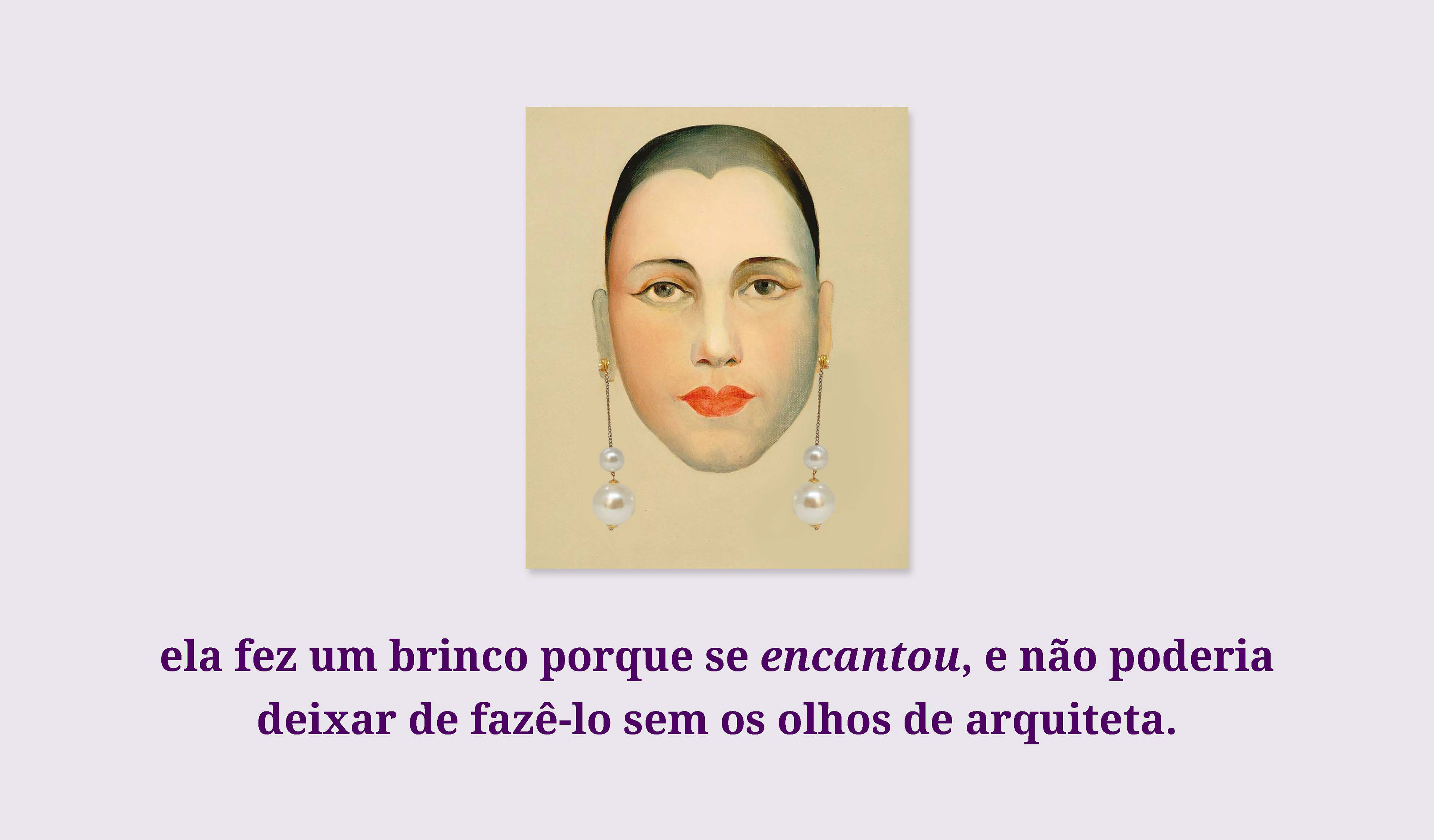
the architect made an earring because she delighted herself with it, and she couldn't avoid making it without an architect's eye.
Nonetheless, I believe that I can also answer this question in a much more simpler way:
the architect made an earring because she delighted herself with it, and she couldn't avoid making it without an architect's eye.
Todas estas respostas contemplam esta minha dúvida inicial.
No entanto, acredito que também é possível responder a esta pergunta de maneira simples:
a arquiteta fez um brinco porque se encantou e não poderia deixar de fazê-lo sem os olhos de arquiteta.